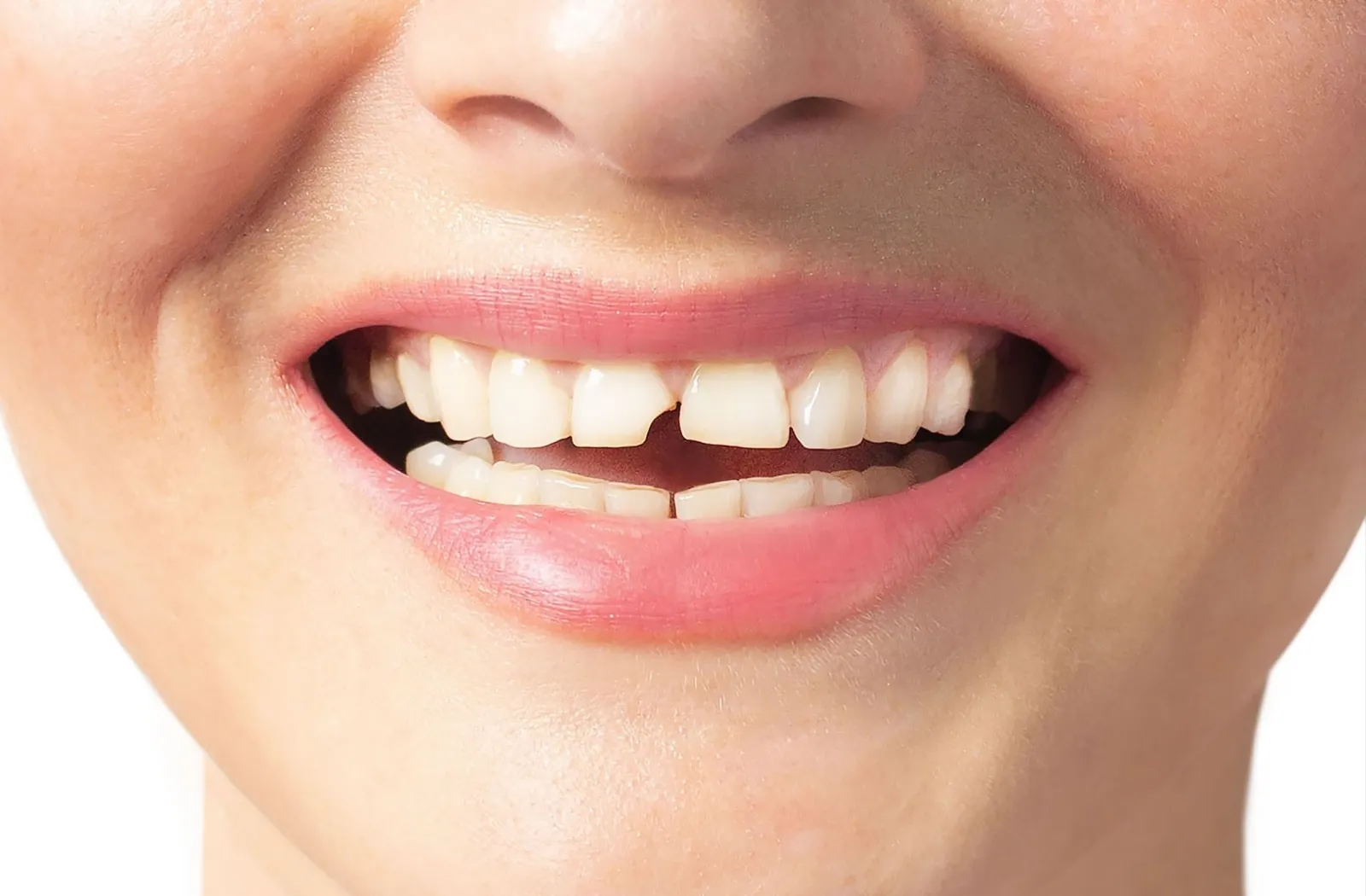
Chipped Tooth? What to Do Next — Step-by-Step Guide to Protect Your Smile
It happens in an instant you bite down on something hard, take an unexpected fall, or feel an uncomfortable crunch while eating your favorite snack. You run your tongue along your teeth and feel a sharp edge you’ve chipped a tooth. Chipped teeth are among the most common dental emergencies. They can range from small cosmetic imperfections that barely show to serious fractures that expose the inner layers of the tooth. While some chips are painless, others can cause sharp sensitivity, discomfort, or even bleeding and if left untreated, they can lead to infection or permanent damage. In this article, we’ll explain the most common causes of chipped teeth, how to identify the severity, the first steps to take at home, and the professional emergency dental treatments that can restore your smile. We’ll also cover simple tips to help you prevent future chips and keep your teeth strong and healthy. cover simple tips to help you prevent future chips and keep your teeth strong and healthy.
Common Causes of Chipped Teeth
A chipped tooth can happen to anyone even those with excellent oral hygiene. Teeth are strong, but they’re not indestructible. Understanding what causes chips helps you avoid repeat accidents and recognize warning signs before damage occurs.
Biting Hard Foods
Crunching on ice, hard candy, unpopped popcorn kernels, or even bones can put excessive pressure on enamel. Over time, enamel may weaken or crack, especially if the tooth already has small fractures or fillings.
Accidents or Sports Injuries
Falls, car accidents, or being hit in the face during contact sports are common causes. Even a light bump can chip a tooth if the impact hits just the right spot.
Teeth Grinding (Bruxism)
Chronic grinding or clenching especially at night can wear down enamel and make teeth brittle. Over time, this constant stress weakens the structure, increasing the risk of chipping.
Weakened Enamel
Acid erosion from sugary foods, carbonated drinks, or medical conditions like acid reflux can thin the enamel layer. Once enamel is worn down, teeth become more vulnerable to cracks and chips.
Aging or Failing Dental Work
As we age, enamel naturally wears down, and older lost fillings or restorations may weaken. These weak spots can become the starting point for chips, especially if you bite something hard unexpectedly.
How to Identify the Severity of the Chip
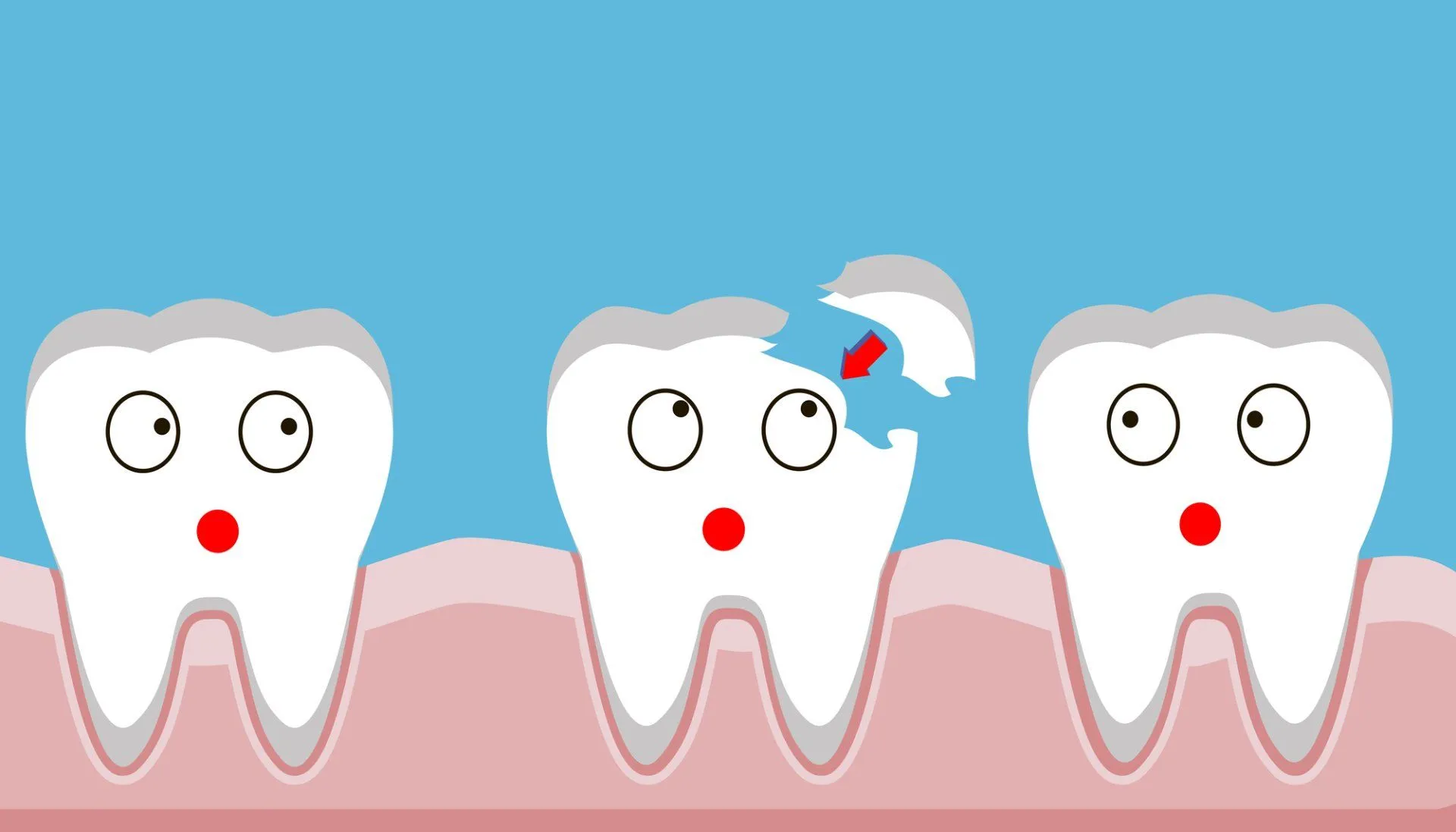
Not all chips are the same. Knowing the difference between minor, moderate, and severe damage helps you decide how urgently to seek dental care.
Minor Chip
- Small piece of enamel missing.
- Usually painless, though the tooth may feel rough or sharp.
- Often occurs on front teeth or edges from minor trauma or biting something hard.
Action
Even if there’s no pain, book a emergency dental appointment. Minor chips can worsen or stain over time.
Moderate Chip
- Visible crack or loss of a noticeable portion of tooth.
- May cause sensitivity to hot, cold, or sweet foods.
- Rough edge that can irritate the tongue or cheeks.
Action
See a dentist soon. The dentin (the inner layer beneath enamel) may be exposed, increasing risk of infection or decay.
Severe Chip or Fracture
- Deep break that exposes the pulp (nerve).
- Pain, bleeding, or swelling around the area.
- Possible discoloration or tooth movement.
Action
Seek emergency dental care immediately. Severe fractures can lead to infection or tooth loss if untreated. Even small chips can hide deeper cracks not visible to the eye. A professional exam and X-ray are the only ways to ensure the root and surrounding bone are still healthy.
Immediate Steps to Take at Home
If you’ve chipped a tooth, don’t panic. Quick, calm action can prevent complications and reduce discomfort.
Rinse Your Mouth
Use warm salt water to clean the area and wash away debris. This helps prevent infection and soothes irritation.
Save Any Broken Pieces
If possible, find and preserve any tooth fragments. Place them in milk or saline not water as this helps maintain cell integrity in case reattachment is possible.
Control Bleeding
If there’s bleeding, apply gentle pressure with a piece of gauze for 5–10 minutes until it stops.
Protect Sharp Edges
Cover any jagged parts with dental wax, orthodontic wax, or sugarless gum to prevent cuts on your tongue or lips.
Reduce Swelling
Apply a cold compress on the outside of your mouth or cheek near the injured area. This minimizes swelling and discomfort.
Manage Pain
Use over-the-counter pain relievers like ibuprofen or acetaminophen. Avoid aspirin if there’s active bleeding.
Avoid Chewing on the Affected Side
Stick to soft foods until you can see a dentist. Hard or sticky foods can make the chip worse or expose sensitive tissue.
Remember
Even if the damage seems small, only a dentist can confirm the extent and prevent infection or further cracking.
When to See a Dentist Urgently
Some dental chips can wait a day or two, but others require immediate care. Seek urgent dental attention if you experience:
Sharp, severe, or throbbing pain.
Bleeding that won’t stop after applying pressure.
Swelling around the gums, jaw, or face.
Visible nerve exposure or tooth discoloration.
A tooth that feels loose or out of alignment.
Prompt treatment prevents infection, abscess formation, and more extensive (and expensive) procedures later.
Professional Treatment Options
Your dentist will determine the best treatment based on the chip’s size, location, and severity. Here are the most common options:
Dental Bonding
For small chips or cosmetic issues, dental bonding is quick, painless, and affordable. The dentist uses a tooth-colored composite resin to rebuild the missing part and shape it to match your natural tooth.
Duration: 30–60 minutes per tooth.
Longevity: 3–10 years with proper care.
Veneers
Porcelain or composite veneers are ideal for front teeth with noticeable cosmetic chips. A thin, custom-made shell covers the front surface, restoring both appearance and strength.
Duration: 2 visits (preparation + placement).
Longevity: 10–15 years.
Dental Filling or Onlay
If the chip affects the biting surface or involves moderate tooth structure loss, a filling or onlay can restore functionality. These are durable and blend naturally with your existing tooth color.
Dental Crown
A crown covers the entire visible portion of a damaged tooth, providing full protection and restoring strength. Crowns are typically used for large chips or fractures.
Longevity: 10–20 years depending on material and care.
Root Canal Treatment
If the tooth’s pulp (nerve) is exposed or infected, root canal therapy is necessary. The dentist removes the damaged tissue, disinfects the canal, and seals it. The tooth is then restored with a crown for long-term protection.
Dental Implant
If the tooth is severely fractured below the gum line and cannot be saved, extraction and replacement with a dental implant may be required. Though more involved, implants provide a permanent, natural-looking solution that preserves bone and function.
Cost and Recovery Expectations
The cost of repairing a chipped tooth varies depending on the damage and treatment type:
Bonding: $100–$400 per tooth
Filling or Onlay: $150–$600
Veneer: $500–$2,000 per tooth
Crown: $800–$2,500 per tooth
Root Canal & Crown: $1,000–$3,000 total
Dental Implant: $2,000–$5,000+
Note: Prices vary by region, material, and insurance coverage.
Recovery is usually quick. Minor treatments like bonding or fillings require little to no downtime. For crowns or root canals, mild sensitivity may last a few days.
Avoid biting hard foods, ice, or candy during healing, and follow your dentist’s instructions for cleaning and follow-up visits.
How to Prevent Chipped Teeth
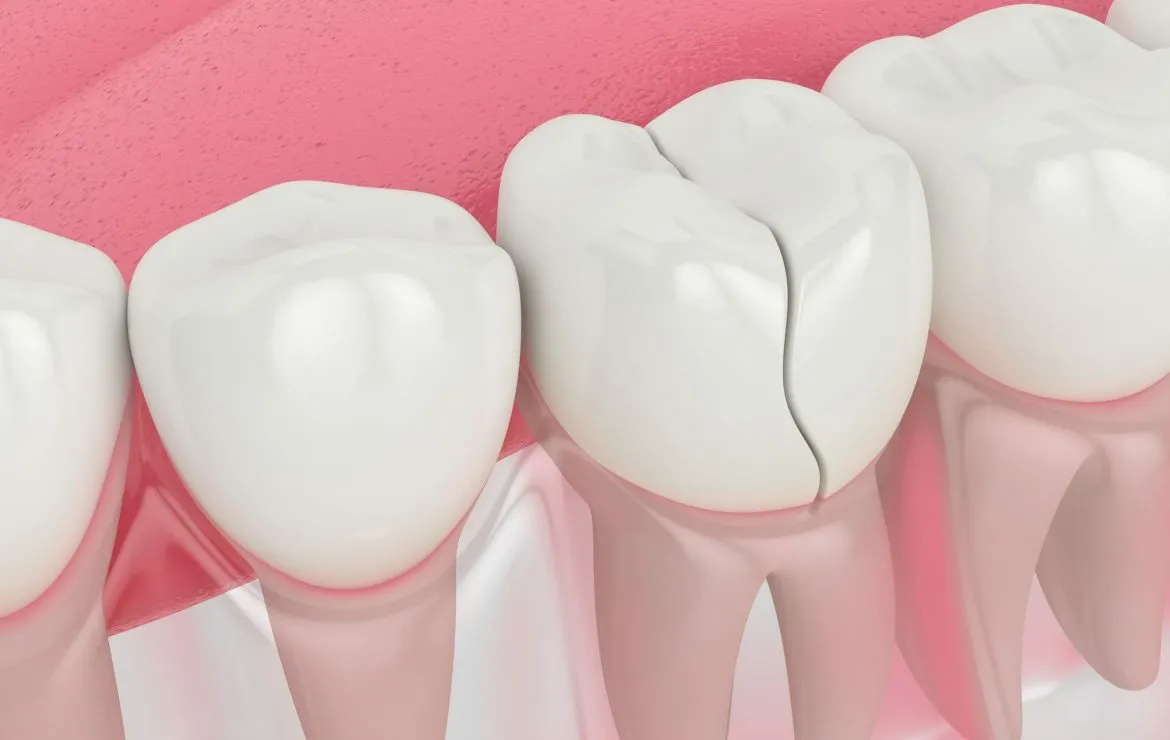
Preventing chips is far easier than repairing them. A few mindful habits can help you protect your enamel and keep your smile intact.
Avoid Hard Foods and Objects
Skip chewing on ice, hard candy, pencils, or fingernails. These habits create unnecessary stress on enamel.
Wear a Mouthguard
If you play contact sports or grind your teeth at night, a custom-fitted mouthguard can prevent cracks and chips.
Maintain Regular Dental Visits
Routine check-ups every six months allow your dentist to spot weak enamel, small fractures, or loose restorations before they lead to bigger issues.
Strengthen Your Teeth
Use fluoride toothpaste and drink fluoridated water to strengthen enamel. Include calcium-rich foods like dairy, almonds, and leafy greens in your diet.
Practice Good Oral Hygiene
Brush twice daily with a soft-bristled brush and floss regularly to remove plaque that can weaken teeth.
Manage Bruxism
If you grind or clench your teeth, seek treatment. Nightguards, stress management, and muscle relaxation techniques can help.
Conclusion
Chipping a tooth can be alarming, but it doesn’t have to spell disaster. Thanks to modern dental care, chipped teeth can be repaired quickly, safely, and beautifully often with results that look and feel just like your natural teeth. The most important step is acting fast. Ignoring even a small chip can lead to cracks, decay, or infection. Early intervention keeps your teeth healthy, prevents pain, and preserves your smile’s strength and beauty. Whether your damage is minor or severe, your dentist can recommend the best dental treatment to restore your confidence and comfort. And once your tooth is repaired, taking simple preventive steps avoiding hard foods, wearing a mouthguard, and maintaining strong oral hygiene can help you avoid future accidents.
Related Post

Your child’s first dental visit plays a key role in lifelong oral health. Learn the ideal age for the first appointment, what to expect during the visit, and how early dental care helps prevent future problems.

Cold sensitivity in teeth is often caused by enamel wear, gum recession, or underlying dental issues. Learn the exact reasons your teeth react painfully to cold foods and drinks, along with effective solutions to restore comfort and protect your smile.
